Technology Operations
Tech Doesn't Solve Chaos. It Reflects It.


64% percent of event organizers plan to switch platforms this year. I've watched this cycle long enough to say with some confidence: most of them will not see their outcomes improve. Not because the new platform is bad, but because the platform was never the problem.
When an event tech system is underperforming, the instinct is to blame the tool. It's visible, it's concrete, and switching it feels like action. What's harder to see — and harder to fix — is everything the tool is sitting on top of: the unclear requirements it was configured against, the lack of ownership that let technical debt accumulate, the adoption plan that never quite happened, and the strategy that changed three months in without anyone updating the system to reflect it.
Configure a new platform on top of the same conditions, you get the same outcome. You also get a steep learning curve and a team that's now burned out from migration on top of everything else.
I fight hard for the devil you know. Not because change is bad, but because switching platforms is expensive, disruptive, and rarely addresses what actually needs fixing. The bar for replacement should be high — and the decision should follow a clear-eyed diagnosis of what's actually broken, not a frustrated response to symptoms of a larger, systemic problem that will follow you to the next vendor.
What technology operations actually means
Technology operations isn't about which tools you use. It's about how those tools are owned, aligned to your strategy, and adopted by the people who actually run them.
The diagram below captures the structure: event strategy at the top, and driving three enablers — ownership, alignment, and adoption — that determine whether the tools at the bottom of the stack actually deliver.
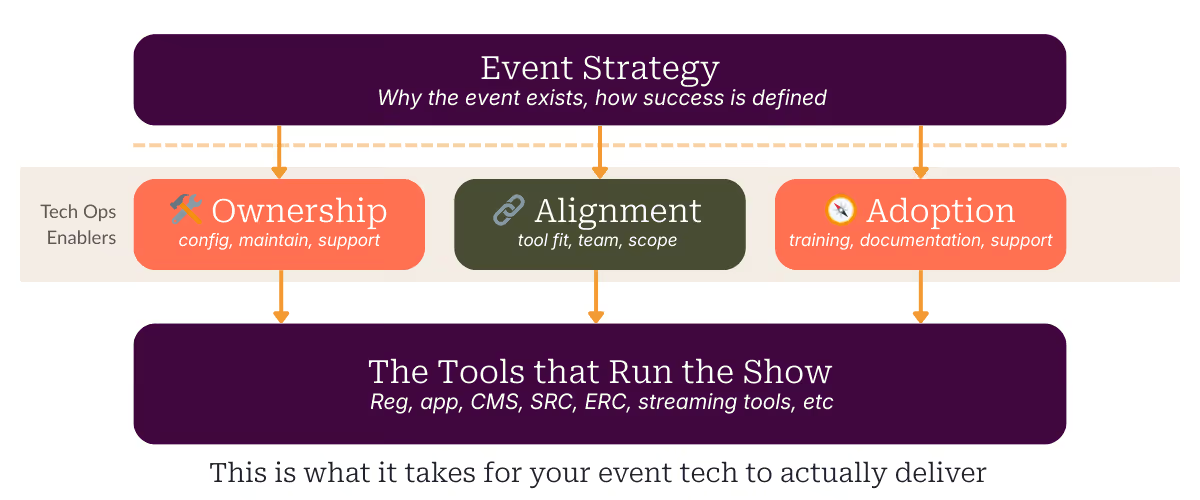
Ownership means someone is accountable for configuration, maintenance, and support. Not "the team" — a person, or a defined set of people with clear lanes. When something breaks at 9pm two days before the event, there can’t be any ambiguity about who to call.
Alignment means the tools fit the team, the scope, and the actual events you're running — not the ideal scenario some vendor demoed. A platform built for a 50-person enterprise team configuring 40 events a year is not the right fit for a team of three running two events a quarter — regardless of its feature set.
Adoption means training, documentation, and support aren't afterthoughts bolted on after go-live. They're built into the implementation plan from the beginning, because a tool nobody fully understands is a liability masquerading as infrastructure.
When all three are present and connected to a clear event strategy, the tools run the show. When any one of them is missing, the tools become the problem — even when they're not.
The platform isn't the problem. The system around it is.
Most event tech failures trace back to one of a few recurring patterns:
- requirements that were never fully documented
- ownership that was assumed rather than assigned
- or, adoption that was declared complete when training ended rather than when the team could actually operate the system independently
The platform-switching impulse usually arrives after one of these patterns has been around long enough that the tool feels like the common denominator. And it sometimes is — there are genuinely bad fits between platforms and organizations, and the right answer is occasionally to switch. But the decision should come after a clear diagnosis, not before one. Otherwise you're solving for the symptom and carrying the root cause into the next contract.
For practitioners who want to go deep on technology operations — requirements, tool selection, configuration, testing, and ongoing governance — Smart Event CORE covers all of it in structured detail.
Technology Operations is the fourth dimension of the ACCORD framework, and in many ways the most visible one — because when it breaks, it breaks in front of your attendees. But what breaks onsite was almost always set up to break weeks or months earlier, at the requirements stage, or the ownership stage, or the adoption stage. The tech just makes it undeniable.
Getting technology operations right starts with being honest about what the system around the platform actually looks like — and whether it's set up to make any tool work.
More ACCORD Dimensions
Strategic Alignment | Clear Communication | Culture of Collaboration | Operational Readiness | Event Delivery
FREE Personlaized Event System Health Check