Podcast Episode
October 14, 2026
Episode 12 | The Booth Is Melting

Show Notes
What do you do when a bottle of industrial-strength adhesive remover gets run over by a forklift and sprays your nearly finished exhibit? Or when you walk onto the show floor hours before opening and discover your booth graphics have gone full Salvador Dalí?
You fix it. Fast.
And preferably before the client finishes saying, “That’s not supposed to look like that, is it?”
Jen Santos sits down with Chris Dunn, VP of Sales and New Business Development at BlueHive Exhibits, to talk about what really happens when trade show plans meet the chaos of the show floor.
This convo begins with flying Goof Off and melting vinyl letters and turns into a conversation about why relationships matter when everything goes sideways, how exhibit companies have evolved from booth builders into experiential marketing partners, and why owning a mistake earns more trust than pointing fingers ever will.
Chris also shares a vital lesson 30 years in the industry has taught him—the best exhibits actually support business goals, they don’t just look pretty from the aisle.
Top Takeaways from Chris & Jen’s convo:
- Your emergency plan might just be your Rolodex. When the show opens in two hours and you’ve got a crisis, the people you’ve helped over the years suddenly matter a whole lot more than whose logo is on their shirt.
- “Pretty” booths aren’t enough anymore. Start with what success actually means—leads, recruiting, awareness, product launches—then design the space, messaging, and experience around that goal.
- If the activation has nothing to do with the brand, it’s just free socks. Coffee carts, holograms, popcorn, games, and other “gimmicks” can absolutely work—if attendees remember you after they walk away.
Podcast Guest
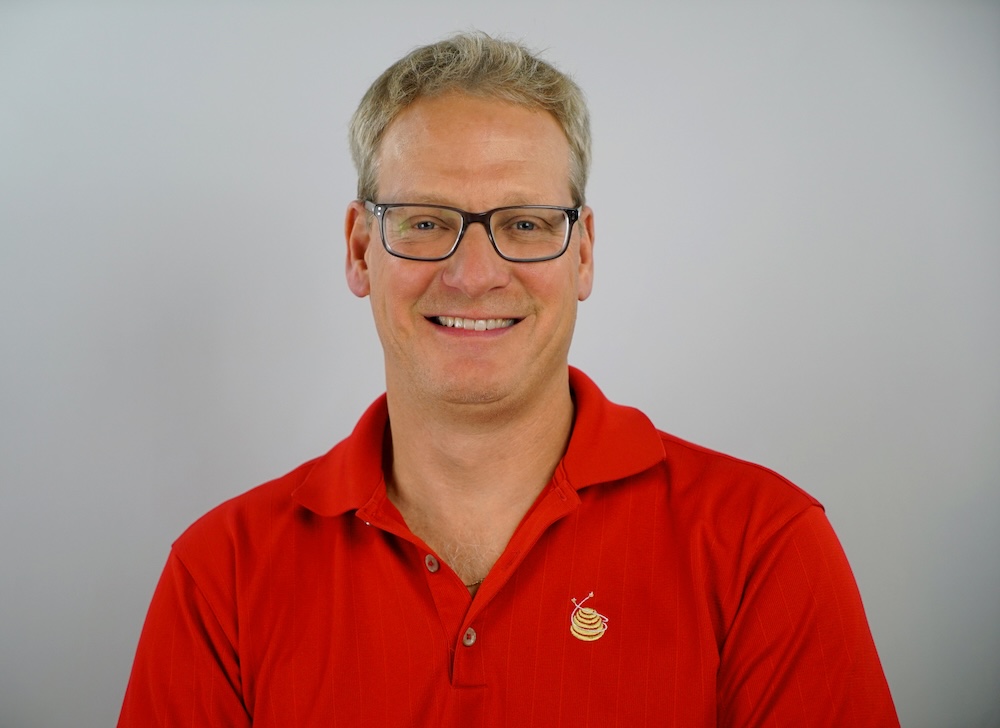
Chris Dunn
VP of Sales and New Business Development, Blue Hive Events
Chris has been in the tradeshow and events industry for 30 years. Coming to teh industry with a background in design, and transfering those skills to an individual producing sales role... and post Covid, moving into a leadership role.
Transcript
Episode Transcript
Chris: All these letters are like falling off of the wall. They're still stuck on there, but they're like all like, mm, melty. And it was like, one of my clients looks at me, he's like, that's not supposed to look like that. And I was like, oh shit.
Jen: Hey everyone, I'm Jen Santos and this is Mayhem and Method, where event pros tell the real story of what happened and what it reveals about how events actually work. Hi everyone, and welcome back to another episode of Mayhem and Method. Today I am here with Chris Dunn. He is the VP of Sales and New Business Development at Blue Hive Exhibits. Chris, thank you so much for taking time out of your day to be here.
Chris: Well, thank you for having me. I appreciate it, Jen. It's great to be here.
Jen: Yeah, I am looking forward to some exhibit mayhem stories. So—
Chris: I got a couple.
Jen: I am absolutely sure you do. What is one of your favorite venues to work in? And why?
Chris: I love San Diego. And it's really— when you say venue, it's just like a whole city thing. So I'll kind of paint you the picture. You land, you're literally like 5 minutes from downtown, right? There's no 1-hour awful commute from, from O'Hare into Chicago proper. Yeah. So I love, I love the proximity. The weather is spectacular. The convention center sits on this beautiful marina. So you're looking out at Coronado, you're looking out over the bay. It's got all these, you know, multimillion-dollar boats out there, none of which I own, but I can look at them. And, and the venue itself is, is great to work in. It's kind of a— it's the long skinny style, if you may not have been there. There's a few other out there. So in Orlando, the West Convention Center is kind of a long skinny layout, right?
Jen: Right.
Chris: versus a boxy one.
Jen: Yep.
Chris: So it's just a pleasure to work there. The unions aren't things that are, you know, they don't make it overly difficult to deal with. Right across the street is the Gaslamp District. Great place to take clients. The ballpark's right there. So all in all, I just, I love, I love me some San Diego.
Jen: That's awesome. I've only been there once and everybody— I've actually asked other people and I get this answer pretty regularly that they love San Diego as a venue. And now I'm like, okay, now I need to actually go back and work an event.
Chris: Yep. Yeah, 100%.
Jen: So, Chris, we all know that onsite can be chaos or mayhem, if you will, right? And what I would love to have you do right now is I'd love to have you take a couple of minutes and talk about an onsite mayhem story that happened, right? No names. We're not here to name and shame. And then after you kind of tell the story, we'll go through and we'll kind of talk about what happened before what happened happened, because we always know that what happens onsite actually started like 18 steps before that.
Chris: I'm going to give you an example, and I'm not sure that we'll be able to draw that exact correlation back, but, but you're right. Like, there are, there are consequences to paying attention and not paying attention, right?
Jen: Totally.
Chris: So this was a bunch of years ago. It may have actually been in San Diego. I think it was. We had the booth set up. It was a day before show open. Um, we're, we're like 90% there, right? Everything's pretty much in place. Good-sized hanging sign overhead, quite a lot going on the show floor. Um, and as you mentioned, you know, there's mayhem on the, on the floor. People are getting rid of their crates and there's, you know, the, the cherry pickers are cruising around. Um, there's a fork truck that went by, closely followed by a little, like a cart, you know, one of the carts like the electricians drive or, or one of the other, you know, service guys that are related to the show floor. So, um, a fork truck went bouncing by, and he must have had like a little box on the back of his— no, I'm sorry, other way around. The cart went by, something fell off the cart, and then the fork truck hit it right behind him. So what came off the cart was a, was a bottle of, of Goof Off, right? So this stuff's got some— What's Goof Off? Goof Off is an adhesive remover. Oh, so if let's say you take a decal off the wall or something like that and it's left with adhesive, you can use Goo Off. It's not, it's not nearly as toxic as like mineral spirits or lacquer or something like that. It's got a, it's got a strong orange kind of a scent, but there's chemicals in there, right? Because it, because it eats adhesives.
Jen: Okay.
Chris: And it eats, it eats other things as well. So cart goes by, he's bumping along. bottle of Goof Off comes off, happens to land on the ground with the capped top facing us. Fork truck hits it and projectile takes this, this adhesive-eating liquid and he sprays it all over my booth and people.
Jen: Oh no.
Chris: Like, people got hit, like, and it— when it lands on painted material, it starts to eat the paint. And it hit up on the sign, and it hit different spots in the booth, some of which were you know if it's just a laminate with nothing on it, it's not affected. Obviously, got to clean it up. But that was that was a panic moment because we're like, oh shit! You know the client was actually in the booth with us. They saw it happen. They knew it wasn't our fault per se, but that doesn't matter, right? It's like it's not so much about what happens; it's what what do we do?
Jen: Yep.
Chris: And I will say so. I think anybody who spent a lot of time on the show floor, we've got our, our issues with the GCs, right? Whether it's a GES, a Freeman, you know, Fern, or whoever it happens to be. Right. It's like they're not always necessarily our best friends. However, in this particular case, it was Freeman and they were super responsive. They, they owned the fact that this was not our problem, but they could help us fix it super fast. So literally within 5 minutes, I had a, I had a scissor lift In the booth, I had a guy up there. I'm like, I need one of my, my Entegri, you know, labor guys to go with your guy. We got to go up. We got to clean the sign. It's starting to literally attack, you know, the paint on the, on the 3D letters and other stuff. And they were as accommodating as possible and they really kind of jumped in and helped out. And I think the lesson that I take from that is like there's a, there's a community of people who are on the trade show floor and we're all wearing different color laundry. But at the end of the day, that doesn't really matter because, you know, the rising tide raises all ships. And yes, of course we're competitive, but that community that's on the show floor is way less competitive and much more communal and much more helpful for a lot of different reasons. But we had a bunch of people who pitched in and helped us kind of get this cleaned up as quickly as possible and turn a situation that was, you know, could have been horrible into something that was as, you know, just, we made it as good as possible. Yeah.
Jen: Right.
Chris: Let's say, what if this happened after hours and we weren't there? You know, who knows? Like this, this goo would have sat on, you know, sat on a printed sign or sat on this, you know, these letters that were painted for hours and it would, it would have ruined everything. So, you know, you look at a situation like that and you're like, well, that sucked. That was nothing that the, didn't do anything wrong yet. At the same time, we're responsible for making sure that we fix it and at least doing the best that we can to resolve the issues.
Jen: Yeah, and really, like, nobody really did anything wrong in that situation, right?
Chris: Like, nope, it was, it was 100% an accident. Yeah, exactly. Um, you know, let, let's replay that thing, you know, 100 times. Uh, the bottle probably spins and squirts somewhere else, or doesn't even get hit by the wheels, or somebody stops and picks it up, right? It's like It's like it could have gone down a number of different ways. It just happened to, you know, lay out like it did. But it's, uh, it's not, it's not, you know, what happens but of what you do with the situation.
Jen: Exactly. Yeah. And I mean, I think that's one of the things that sets— I'd like to think what sets event planners apart from a lot of different professionals is that the show must go on, right? Like, the show floor was still going to open, whatever, probably the next day. And so you were still there like, okay, well, how do we solve this? You can't be like, well, we'll just have to open the show next week. Like, that's not actually— I'm calling timeout.
Chris: I'm calling like, everybody stop.
Jen: Yeah, right, exactly.
Chris: No, that doesn't happen, right? So we are, we are— I think that's part of, um, I think— and, and honestly, like, I'm 30 years in the industry, you know, almost all on the, on the trade show side and some event work as well. Um, and we're kind of adrenaline junkies, you know. You think about people who have stuck around And it's, it's, um, it's being able to tell those stories with a smile, right?
Jen: Yeah.
Chris: Because tragedy plus time equals comedy.
Jen: Yeah.
Chris: So at the time it really sucked, but here we are. It's probably, that was probably 10 years ago.
Jen: Right.
Chris: And I'm talking about it and it's like, well, we didn't just, you know, roll over and say, oh, that really sucks. We, we jumped into action, we fixed it to the best of our ability. Uh, and then we lived to tell the story. And, and that's, you know, the fact that the client actually saw that. was a good thing.
Jen: Yeah, right.
Chris: It was, um, it's not don't ask us, uh, you know, how we do when everything goes well. It's ask us how we do when things go south and how do you react.
Jen: Yeah, I mean, that probably honestly ended up earning a ton of goodwill with the client to see everybody jumping in and trying to fix it and to understand, you know, it's not— it's like we don't— I don't wanna say we don't learn from successes, but honestly, we learn more from failures or mayhem in this case than we ever do from successes. So, right, you were talking about like friends on the show floor, right? And so I know that when I work events, I'm over on the event tech side of the house and I will go from event to event to event, from client to client to client. And I'm like, oh, hey, it's you again. Oh, hey, it's you again, right? Like the event tech world is really small. So I see the same people popping up on different shows, events, corporate events, trade shows, whatever. It seems like it's the same people everywhere. Do you run into that a lot in your world as well, or not so much?
Chris: Yeah, very much so. You know, there's a— it's a big country and it's a big industry. It's not well known outside of the people that we know, but it's also a small industry.
Jen: Yeah.
Chris: And yeah, there's not a show that I go to that I'm not running into somebody that I know. Now I'm in Chicago a lot, right? So you get to know some of the local guys and not all of them necessarily travel, but you see the same, you know, the same riggers. Oh, I worked with you on a job. Remember that thing that we did?
Jen: Yeah.
Chris: You know, so there's camaraderie that's built there. And then there are people like myself who travel a lot, right? So if you're, you know, in the pharmaceutical world, you're doing a series of shows and you're probably running into the same people over and over again. That's not necessarily one of my, one of my vertical industries, but it's, it's a very— it's big but small. So I was actually just in Chicago a couple of days ago for an awards banquet. And, you know, over the years that I've been in the business, it's like you just you know, make friends with people that you either do business with or you see them all the time. Maybe you never do business together, but you see each other and it's just, uh, it's a real cool community. And I, I try not to take it for granted because I, I think it's pretty special and I don't believe that it, that it exists in every industry. Uh, it's, uh, what's the amalgamation of, uh, uh, competition and cooperation is coopetition or something like that. It's like that. That's a real thing.
Jen: Yeah, it really, really is. So, tell me what you would've done if it had happened like after hours. Like what, like I, you obviously don't actually know because it was a long time ago, but had it happened after hours, like what would be the type of thing that your team or a team would end up doing? Any ideas?
Chris: Yeah, you do whatever it takes. I will tell a slightly different story. But it was something that happened overnight. So we did a show in Barcelona, Mobile World Congress, about 10 years ago, 12 years ago. And at that point, systems and printed fabrics and so forth weren't as popular in Europe. So all of our walls were painted. And this is in Barcelona and it's February, right? So Barcelona's really nice, but in February it's not that nice. It's cold. So our walls were kind of, kind of cool. They had painted the, the, the paint had never really cured really well. And we put a bunch of vinyl letters on it. So the morning, everything looked great. The night before the show, we go, you know, go out to dinner with the client. Like everything, everybody's feeling really good. We're coming down the escalator into the show hall the next day. And all these letters are like falling off of the wall. They're still stuck on there, but they're like all like, melty. And it was like one of my clients looks at me, he's like, that's not supposed to look like that. And I was like, oh shit. Um, no, it's not supposed to look— it didn't look like that yesterday and it's not supposed to look like it. So you do whatever it takes. You know, I'm, I'm making phone calls. I'm like, I grabbing, uh, you know, the company that we were leaning on for support. Um, uh, I'm jumping in and like burnishing the letters back on and, and, you know, luck, I think we found a heat gun. or a hair dryer or something like that. And it's like, all right, we got 2 hours to get it done, right?
Jen: Yeah.
Chris: So the— you just— you call in your favors. That's where— that's where all of the years that you've spent being a good person and somebody who helps other people and somebody who's a giver in the industry and somebody who's not, you know, doesn't let the color of their laundry, you know, deter you from helping other people. That's where you can call those favors in because you're not, you know, you're not that jerk who refuses to kind of play nice in the sandbox. And you just, you know, start making executive decisions. You know, we had like this muslin scrim as a ceiling. And I— so I couldn't literally get to the wall because— but the letters were all falling and I'm like, I'm— I have to cut this.
Jen: Yeah.
Chris: So I I cut it and, you know, with a knife and I got a ladder and went up there and I'm sticking it back on the wall. And, and then we, you know, taped up some stuff. You know, it wasn't perfect, but it was like, okay, let's— the show's going to open at whatever, 9:00 AM. Here we are, we're at 7:30. I got an hour and a half to get it all done. And so you gather the team, you, you don't worry about pointing fingers. You know, there's time later to regroup with the client and go like, All right, here's what happened there. Never going to let that happen again. I apologize. I'm, you know, it was a stressful time for you guys as well, worrying about the show open, right? So you got to own the mistake, um, you know, and, you know, pointing out like, oh, that wasn't really our fault because it was cold in here and the paint didn't cure— like, they don't care. They're like, this can't happen again, right? Um, so, you know, you kind of, you own it, you fall on the sword. You don't spend a lot of time kind of pointing, you know, pointing at other people, and you just whatever it takes to get it done.
Jen: Yeah, totally. No, I, you know, with event tech again, however many— I think I'm going on 15 years at this point. And what I've always said from like day one is we said we succeed and we fail as a team, right? And so as event tech, you're used to dealing with a lot of different vendors and they like— our clients don't care and our attendees don't care. It all has to work together. So there always needs to be this give and take. And I love what you— I really, really love what you said about how it doesn't matter about the kind of laundry you're wearing, right? It doesn't who you work for. And if you can go and be generous with others, right? You see somebody that needs a hand lifting something, moving stuff out of the way, getting your stuff out of the way for somebody else to go through, whatever. I spend very little time on a trade show floor. You can probably tell that. But all that stuff makes it different later on. It's like, oh, hey, that's Chris. That's that really cool guy. Ooh, it looks like he could use a hand. Ooh, the letters are melting. That's not great. Let me jump over there and see if I can help him. 'Cause it's about, 'cause the show floor's about to open. And I think that's actually one of the things I really like about our industry for the most part, is we seem to have a lot of really generous people that do this work.
Chris: Yeah, I agree. And I'm sure you could cite stories on your end, right? It's similar but different. But at the same time, like, tech fails all the time, right? Stuff goes wrong. Like, how do we, how do we band together? How do we fix this? I know this isn't your problem. I'm asking you. for your help. You know, how can you help me? Um, I'm in a strange, you know, city. The show opens tomorrow on a Monday here. I hear it is Sunday afternoon. Who do you know that can help me get this done? Because, um, even though everyone— all the businesses that do this thing are closed, somebody's out there, right?
Jen: Yeah.
Chris: Um, so having a deep Rolodex, having, um, having spent time again kind of giving back to the community, helping other people, not being a jerk, um, you You know, we're all fighting for real estate, you know, on the show floor when we're setting up. It's like there's crates everywhere and you can get in a pissing contest with the booth behind you because you're battling for space. But that really isn't going to get you anywhere. You know, you might win the battle, you're not going to win the war.
Jen: Yeah.
Chris: So, you know, like, hey, listen, if I do this now, I'll clear out of here and then you can do what you need to do, right? Little interactions like that, I think the way they're handled just make a big difference. It's a big industry, but it's a small industry, right? So, people remember, like, they— you treat them well, they remember that. You treat them poorly, they remember that too.
Jen: Yeah. And it's not just, you know, because like a lot of times the exhibitor teams, right, you're like kind of like a third party. You're not necessarily the client, but you're known for representing that client. And a lot of times, like I do, I'm a consultant, right? So, I work with a lot of different clients, very similar to what you do. And so, it can be like, oh, hey, I'm gonna refer Jen because I had a really good experience with her working on this other client. And so it's not even necessarily the client, it's another vendor that referred you, right? So it's like there's another exhibition team and it's like, oh yeah, I mean, Chris, I saw him, I've worked with him on a couple of shows with another team and he's really great. Why don't you give him a call? Because it all— there's a lot of karma and energy, I believe, that goes into this.
Chris: 100%. Yeah, it really is. And I think, you know, we talked a little bit about AI earlier. It's a great tool, but it doesn't replace human interaction. And I think, you know, the more digital that our lives get, the more— and we're seeing it like, like, like events right now are off the charts. Like people can't get enough of them. They have to figure out how to do them better, more efficiently and effectively and spend less money maybe, or get more results. But they, they are on board with the idea of like, let's get face to face, belly to belly with our clients, with our customers, with our partners, because That can't be faked, you know, by AI. It's like the real human interaction piece is, is, is ever more critical than it has been.
Jen: Yeah. And that's where I really think that AI can help us all out in our jobs, right? It's like that behind the scenes stuff. Like for me, it's like, okay, like I need to run a show written, I need to have these processes done. We're starting to use a lot of, there's these, the MCP connectors, these Model Context Protocol connectors. And so we're starting to use them for moving our data around, right? Like there's nothing more interesting in life than copying— this is what I'm doing this week is I'm doing translations. So there's nothing more interesting in life than copying Japanese over into a registration system, right? But if once you have these NCP connectors in place, then that can start lifting that load. But what that does is then that starts giving me the space to start thinking about, okay, so what can I do to figure out like some of that traditional surprise and delight elements? What can we do to make the lives of our— of our event planners better? What can we do to make our attendee experience better? And offloading what makes sense to be offloaded over to AI so we can really focus on creating an exceptional experience. And I think about what you guys do with expo floors and how much I love watching the creativity of exhibitors.
Chris: Yeah, yeah, yeah, exactly right. It's like, that's where AI shines is like, help us, help us be more efficient with this other stuff so we get to spend more time with the good stuff, the human interaction.
Jen: Yeah.
Chris: You know, I remember just a funny anecdote, whether it stays in the show or not, but my, you know, my wife, when in the early days of AI and everybody's using it to create art and write poems, and she's like, I want it to do my dishes and do my laundry. I don't want it to do the fun stuff.
Jen: Yeah, exactly. Like, I have it help me actually with a lot of the podcast stuff, 'cause there's a lot, even though My production team is absolutely amazing. There's still a lot of work, as you know, into getting a podcast out the door. And so I use AI heavily to help me figure out to kind of do those mechanical pieces so that I can spend the time bluntly out on LinkedIn prospecting my guests such as yourself. Right. And then figuring out how to promote the podcast afterwards, because that's the value other than actually recording it like we're doing right now. that I can bring into the process.
Chris: Yeah, perfect. Great example.
Jen: With your melty letter situation, right, from the overnight, I don't have a better way to explain that. I like melty letters. I'm just gonna keep going with that. So how did the conversation with the client go afterwards? I mean, obviously it's like, hey, this happened, they saw it, not great. But like, what— I'd love to hear this part of the story as well.
Chris: So we always try to do a post-show kind of recap, postmortem some people call 'em. In this particular case, it felt like postmortem.
Jen: Yeah.
Chris: Um, it was, uh, it was, it was kind of leaning into the obvious. The elephant in the room is like, okay, like at the end of the day, I think you had a pretty good show. That was great. Um, we caused the— what happened with the letters caused a ton of stress as we started day 1, and that's never the way that we want to start that, right? So I think going back and owning that mistake that happened and acknowledging that that was less than ideal, um, instead of trying to gloss over it, like that's an important piece, right? People want to know that, that, that I, I internalized the fact that, you know, the way that we produced the booth, um, led to a lot of, a lot of stress. And at the— at that moment, there was disappointment, and we were able to turn that around. So I think you, you have to kind of get out in front of that a little bit, um, and talk about, you know, be, be super candid with like, we're, we're never going to do this again. We're not going to— we're not going to paint and then apply vinyl to it like that. It's got its place, but at this time of year in this type of a climate, um, we can't count on that paint drying properly so that we can then apply, you know, the graphics to it.
Jen: Yeah.
Chris: Um, and obviously, you know, this was literally like 2012 or so. Um, the, the use of, uh, dye sublimation fabric and things of that nature have skyrocketed since then. So there's a lot more materials that are available. But I think just kind of, you know, that post-show conversation is being honest, admitting where we made a mistake, and then talking about what are the, what are the solutions going forward. So instead of producing it like that and where we painting, you know, painting large walls and then applying the graphics, we're going to, we're going to move to a different technique, right? Production technique, because that issue that we had there won't happen if we do it this way.
Jen: Right.
Chris: So combination of kind of owning the mistake, Admitting, you know, learning from your mistake and then saying, here's how I'm going to do it in the future, or here's the recommendation we'll make to do it differently next time.
Jen: Yeah. Okay. So this is just me being nosy, like literally on the production process. So you paint— I thought like exhibitor teams usually like painted ahead of time and then shipped it, but it sounds like you were actually painting on site. What am I missing here?
Chris: In Europe, it's a different production technique. And I know you live in South America. I did. It's actually globally speaking, this was more of kind of the norm is they would build You know, we'd build walls and then, you know, tape the seams sometimes or put caulking in or whatever and literally like roll, you know, paint over these walls. So I don't do a ton of international work, but obviously that was a project that I did, you know, with a provider out of Amsterdam. And they send in, you know, everything's kind of been pre-thought about and pre-constructed to a point. In the US, we, we definitely do it differently. We're— we were much at that particular time, we were producers of laminated panels, right? That's how we would achieve that color. And we would build those panels ahead of time, sand everything in, laminate it, you know? So we would've sent in, if it was a US-based show, we would've done it differently. That painting onsite wouldn't happen, but that's kind of the local custom. That's kind of the way that they, they, they rolled. And I, and I know they still do, um, in some parts of Europe. Certain countries tend to do things in certain different ways. So, okay. Yeah. At the time, at the time it was kind of the norm. Like we weren't the only ones painting on site by any means. There's lots of other folks were doing it. And to be honest with you, like you don't get the seams that you do with laminated panels. So there's, there were some benefits to it. In this particular case, it happened to fail a little bit.
Jen: Yeah. No, I'm just curious. Like one of my favorite parts about doing this podcast is that I get to learn a lot about all these other like areas. I'm like, oh, now I want to do F&B. Oh, now I want to do expo. Like, Like, I just wanna like broaden out from event tech.
Chris: Yeah.
Jen: Probably not good for anybody, but I would think it'd be really, really interesting to learn and get some hands-on experience in other areas. So—
Chris: 100%.
Jen: You also mentioned, as you were talking about the recap, that you said to your client, oh, it sounds like, or I think you had a good show, right? Which to me speaks to ROI. So like, as you, as the exhibition team, like how do you define success or not from your perspective for your client?
Chris: Understanding what good looks like going in is important, right? So what are your goals? What are we trying to achieve here? How can we help you do that? What's your message and so forth? So I'd say, you know, in today's age, exhibit companies are way more agency-like than they used to be. It used to be more like, listen, we're crafters of fine-grade furniture construction. We're going to build this cool booth for you and we'll help you get it set up. And now we're more— I don't want to say generalists in a negative fashion, but we have to wear more hats and we have to wear marketers' hats. We have to wear copywriters' hats more so, so that we can help our clients, you know, do not just, not just build a beautiful booth, but also help them with the, the wrap our arms around the end-to-end pre-show promotion, on-site activation, post-show follow-through. Like all of that stuff is kind of falling into our purview more so than it used to. So I think understanding what the client is trying to achieve— is it, is it we got to, we got to fill the pipeline, so we're looking for as many qualified leads as possible, right? That's a common answer, but it's certainly not the only one by any means. As far as why do folks go to shows, a lot of times there's a positioning move. We're going to be selling where we're doing a new product rollout, really. And it's all I can't even sell it in the US, but we want to increase brand recognition or brand, you know, knowledge. I actually have a client. They're not there to sell anything. They're there to actually recruit. It's a, it's a, it's a very quickly expanding veterinary emergency company. They're opening up stores all over the US and Canada, and they're there to recruit doctors. Uh, other veterinarians. So they're not there to sell anything. They're, they're to sell themselves as a, a higher quality of life and a better alternative, uh, work scenario. So you got to understand what they're there for, and that way you can help them create the measurement. At the end of the day, you know, much like the event marketer, uh, that we're working with, um, we're creating the, the mechanism, um, that hopefully delivers the results. Now, are they going to close all those leads? That's up to the sales team. That's not really, you know, per se our job. But, but at the end of the day, that's part of the success of it. So we want to try to influence whatever we can across the board there, if possible.
Jen: Yeah, I love that. And honestly, I have to admit, I didn't really realize that that's kind of where exhibitions and the exhibit— exhibition community has moved. And I really, really like that. I think it's interesting. Take a minute on this. So your client shows up, so you might be like, okay, so now if you wanna get this message out, then we recommend that you do, I'm totally making all these things up, right? Let's have an LED panel here that's gonna do this. And then you probably wanna have like an iPad that's gonna have this, and we want 2 bar stools or maybe one, you know, a couple of chairs for this and really help them figure out the entire experience. It's not just let's build 3 walls and put up a screen and call it a day. Like it's really, it's experiential marketing.
Chris: Yeah.
Jen: in a very limited square footage. Is that fair?
Chris: Fair. More than fair. That's, that's the deal. You know, so 30 years in here this year, and it used to be like, if I, if we build a really cool, pretty booth with an interesting architecture and colorful graphics and maybe a little bit of motion with a TV or something or something moving like that's going to attract the passerby. But that has that's no longer enough, right? And it hasn't been enough for, for quite a while, I'd say. Now, sometimes, sometimes the architecture and the, and just the look and feel of the space is enough to get people to stop. But more often than not, it's like we're talking about like, well, what happens in the booth space? Like, why, why am I going to stop? Why do I care? Let's— it sounds a little flippant, but I like to ask that question. It's like, why do I care?
Jen: Yeah.
Chris: Right? If I'm, if I'm wearing my attendees' shoes and I'm passing by your booth, Based on what I see right here, like, why should I care? Like, tell me something that's going to benefit me, right? So we can kind of be a sounding board for them. And we're not, we're not solving all of the, the, the in-depth copywriting things. We're really, we're kind of helping them kind of think through the process. Almost every company that we work with has some sort of an internal creative team or an agency of record that is involved. You know, so we're not, we're not, you know, worrying about the minutiae of the, of the copy and the content, but we are saying, listen, here, here's the, here's kind of what we consider to be the hot corner with regards to— here's the, with the traffic flow, it's going to come by this space, right? So if the, if the crux of why you're here is to say this message and tell people why you do this thing better, then let's put a big video wall facing that direction, or let's think about what our message is on this particular spot. Because that's going to get the eyeballs on it, right? So we're helping them imagine themselves in this 3D space and think about like, what's the most impactful thing that I can do right now and tell people and show people so that we, so that we achieve the goals that we've set out, you know, ahead of that event.
Jen: Yeah, I love that. So I have one last closing question for you. What is your thoughts on what I'm going to call like gimmicks? Like, hey, go into the booth and pull down as many dollars as you can. or spin a wheel to earn something. Like, how do you think that that works for the exhibitors, for the companies that choose to use that for lead gen?
Chris: I have a thought on this, which I'm— you're probably glad. So the, the activation that you choose has to, has to, has to relate to what you're trying to do in the space. If you— and I always say this about technology all the time, like to use technology for technology's sake is going to be probably a bit of a miss. But when you take whatever you're doing and you tie it into how you're presenting and how you're telling your story, then you can turn that into a win, right? So I saw something really cool at a small show in San Diego a few weeks ago. It was not my booth, unfortunately. It was a competitive booth. But they took 6 of these Hypervision little fans that create kind of that hologram look. You see them a lot in retail stores, right? It's a sneaker and it looks like it's revolving in nowhere or in kind of space. So they built a stand and they had 6 of these propellers that are spinning and creating imagery that all works together. And the And the, the visual on it was like, wow, that's freaking cool, right? So it brought people in, but it also helped tell their story, right? So it wasn't just frivolous coolness. So whether it's that or it's, you know, and I think you can build a story around like a phone booth with dollars flying around if that's your message. It's like, listen, we help people save money that, that otherwise would have disappeared. Right? If you're, if you're telling that kind of story, you're a software company or you're a platform or something and like, use our, you know, when clients who use our product and our service are saving, you know, 15%. So you can tie that, that kind of activation piece into your message. And I think that's the, that's the real win. The other thing I would say about it is that we always like to lean into the idea that, that to become memorable, you need to engage as many senses as possible. So not just obviously, you know, as somebody is walking into your space, there's visual is the easy one. But can I, can I engage them with a tactile type of a thing? Can I have them hold something? Can I have them do something? Push a button, touch something. Smell is something that you don't see a lot on the trade show floor, but that is really powerful. The olfactory memory system, you know, if you have a certain type of, you know, nice scent, It might take them back to, you know, another memory or in the future, like, hey, we're popping popcorn, butter, you know, buttery popcorn in the booth space. And it's not about— it's— there's noise sometimes when it's actually popping, but it's that smell that's wafting in. And then post-show follow-through, I can send them popcorn or something like that. I can do something that, that invokes that memory that we've created there. So engage as many senses as possible and then try to take your I wouldn't call it a gimmick, but I'd call it some sort of a memorable activation or involvement and make sure that that becomes, you know, an integral part of the message in order to have it resonate.
Jen: Right.
Chris: Just to have something that's in the space that gets people to talk or stop. They're going to, they're going to, you know, they're going to do the thing and then they're going to walk away and be like, I don't even know who they were, but I got some socks. Yeah.
Jen: Well, I think you just answered with that what was going to be my follow-on question to my last question, so we're going to ignore that part.
Chris: Okay.
Jen: But I was going to say, like, what about coffee act— coffee card activations, hot dog activations, like all this stuff? And it sounds like if I'm hearing you, you'd say like, yep, totally do a coffee card activation, but then figure out how to tie that into the brand, into the follow-up. Like, hey, maybe you would need— this is a bad marketing message, but less coffee if you use our software because you're not gonna be as tired staying up at night, you know, trying to fix your systems or something like that, right? Or you send them a gift card from the local coffee shop as a way, right? Something like that. But like, if you tie it back, then it makes sense. So even if a tech company wants to do a coffee cart, as long as they can make it relevant, then it would still make sense.
Chris: Yeah, I think you're gonna, just gonna get better, you're gonna get a better stickiness to it after the fact if it, relates. Now, listen, a lot of medical device companies and pharmas and biotech, you know, the Sunshine Act keeps them from giving out things that cost, you know, anything more than a couple of bucks. Right. So they can't— there's some things that they can't necessarily do.
Jen: Right.
Chris: Not that activations have to give people something to walk away with, but they do lean on, you know, to create a nice hospitality. That's the other thing too, right? You're creating a really pleasurable hospitality experience. Experience within your space. Maybe, uh, maybe we've got kind of this Zen zone or something like that where it's like, listen, it's noisy out there, you're exhausted, right? You're, you're, you're going from session to session, and we're going to create an oasis here on our— in our booth space for people to just like come in, grab a cappuccino, sit down, charge your phone, and just, you know, unplug your head for 15 minutes, right? So again, those— they certainly can work. Um, I think there's validity in most any idea. I just think to your point, like, let's tie it back into our message or let's understand that we're going to build our message around that. Right. And do a follow-up. That's, that's a gift card to that, uh, to that local coffee shop or it's, um, you know, it's sending them a bag of, uh, of whole roasted beans from, you know, Brazil or Colombia or something like that. That's a nice tie-in. Like, these attendees have gone to probably, you know, 40, 50, 60 different booths and talked to people that look just like me and are saying the same damn thing as me, right? So, how do I stay memorable on the flip side? And it's things like that that I think can set you apart and make you stand out on the follow-through.
Jen: Yeah, yeah, I totally agree. And Chris, I want to thank you for giving us a memorable podcast episode today. It was really enjoyable hearing about the mayhem, and how exhibits have changed and what you, from all of your decades of experience, think makes a good exhibit and a good activation. So I'd love to give you a couple of minutes to tell my listeners a little bit more about you and where they can connect.
Chris: Awesome. Well, I appreciate it. So I joined Blue Hive in April of 2005. So I'm in my 21st year with the company and it's been quite a ride. It was a small company. It was very much a startup at the time. So Blue Hive is— we're, we're a company that started here in Boston and we expanded to Vegas because that is the mothership of all events in the north, in North America anyway. So we've got, we've got a, we've got a kind of bicoastal situation. We do it— our headquarters here in the Boston area are still larger, but we're doing an increasing percentage of our overall business out of the Vegas marketplace. Um, so we handle everything in the West Coast, uh, really all the way back to at least like Denver, um, you know, from that Vegas location. And it's a full-scale shop. So we, we, we did— we build from there, we store out there, and, uh, we execute, you know, all of the Vegas, Vegas shows and everything. Um, and, uh, yeah, it's, it's a, it's a, it's a great company. We're about 110 people. Puts us kind of a mid-market for exhibit houses. There's plenty of companies that are really big, um, and, and then there's some boutique companies which are great, but they don't have the resources. So we like to say that we're kind of that sweet spot in the middle where we can give you boutique creativity, but we have the resources of a larger group.
Jen: That is so cool. I love that you do this, and I just love hearing about your passion behind what you do, and that I can tell that you truly, truly love your work. So thank you again for your time today, Chris.
Chris: Thank you very much. I appreciate you having me on, Jen. This has been a lot of fun, and I'm always game for chopping it up and telling horror stories from the trade show floor and what I've learned. Yeah, what I've learned from them.
Jen: Oh, there's no fault, no lack of story. Thank you.
Chris: Awesome.
Jen: Thanks for listening in to another roller coaster someone else rode so you don't have to. If you enjoyed this conversation, please take a moment to rate, review, subscribe, and share so other event pros can find the show. Until next time, tame the mayhem.
